
Hunter eyes, explained.
The traits behind the look. The perspective behind the label.
“Hunter eyes” is online shorthand for a compact, intense-looking eye area. People commonly mean a narrow opening, low upper-eyelid exposure, a relatively straight lower lid, and a close brow. The individual traits are real; the complete label has no agreed scientific threshold. Use this guide to check the parts separately, understand what your photo can measure, and keep styling choices in perspective.
Check my eye geometry free ↗What are hunter eyes?
Hunter eyes is an informal name for a narrow, compact eye area that can look deep-set or intense. Common descriptions combine an almond or elongated opening, limited visible upper-lid skin, a relatively straight lower lid, and a brow that sits visually close to the eye. Level or slightly raised outer corners are often part of the description, but a single tilt angle does not define the whole look.
What does the term describe?
The phrase describes the appearance of the eyes together with the surrounding lids and brows. It does not describe iris color, a special pupil type, or better eyesight. A deep-set impression in a photo is also different from a measurement of orbital depth: brow shadow, lighting, and camera angle all affect that impression.
It is not a medical diagnosis or an all-or-nothing checklist. You can have elongated eyes with a visible lid crease, or positive corner tilt with a rounder opening. Looking at those traits individually is more useful than forcing their combination into one label.
What actually makes the hunter-eye look?
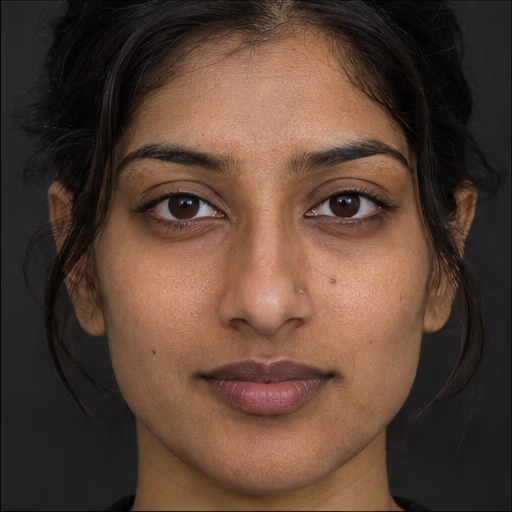
Read each item independently. The fictional models illustrate visible variation rather than “correct” and “incorrect” faces. They are photographic references, not clinical diagrams or proof of an anatomical category.
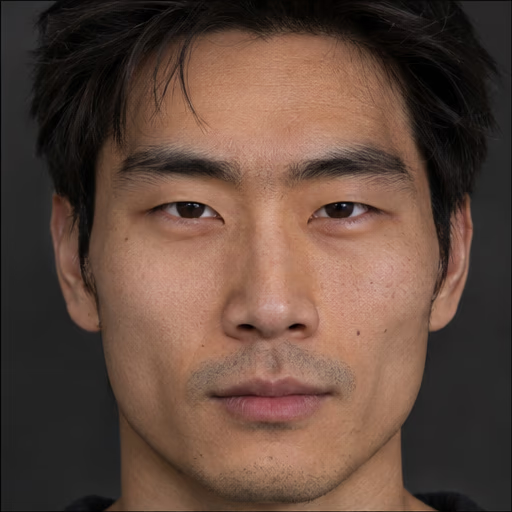 01
Measured in degrees
Canthal tilt
The inner-to-outer corner line. An outer corner above the inner corner creates positive tilt. It is one part of the hunter-eye look, not a pass-or-fail test.
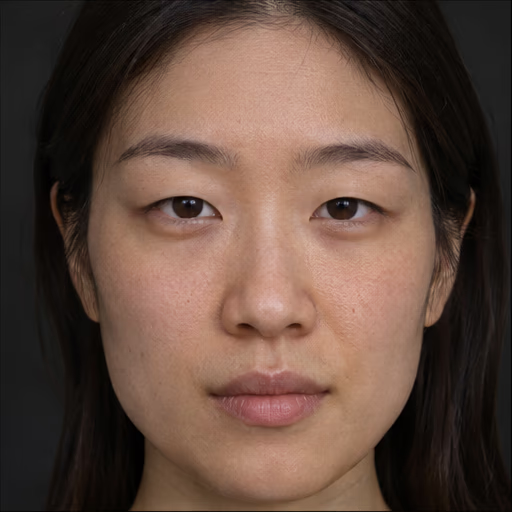 02
AI visual observation
Upper-eyelid exposure
A small visible upper-lid area and a lid that overlaps the top of the iris can make the eye area look more compact. Hooding is a separate visual trait.
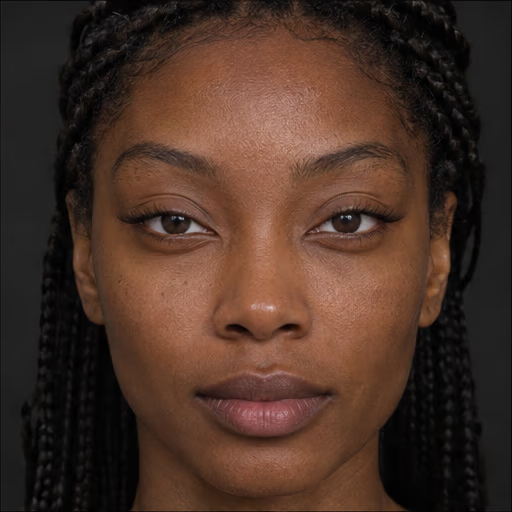 03
AI visual observation
Lower-lid shape
A relatively straight lower lid with little visible white beneath the iris contributes to a narrow opening. A smile or squint changes this appearance immediately.
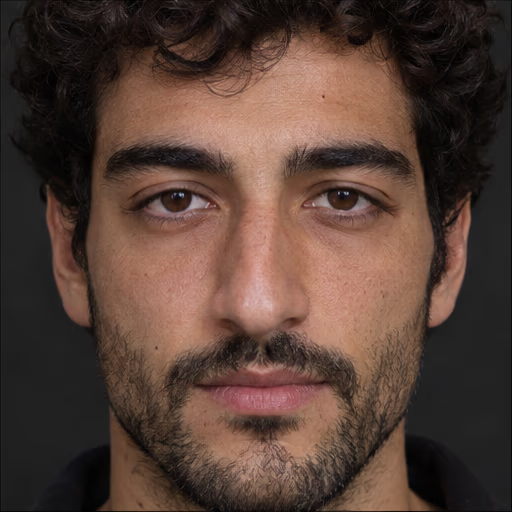 04
Appearance, not bone measurement
Brow framing & depth
A nearby brow and natural shadow can create a deep-set impression. A flat photograph cannot establish true orbital depth; light and brow styling matter.
 05
Measured per eye
Eye-opening proportions
Width divided by height describes a round, almond, or elongated opening. The familiar narrow look often combines an almond or elongated opening with other traits.
 06
Measured as a ratio
Eye spacing & balance
Inner-corner distance relative to average eye width adds context. Small left-right differences are common. Spacing is descriptive and does not decide a hunter label.
Do I have hunter eyes?
Photo reference: eye-level camera, relaxed expression, both eyes clear.
1. Start with a useful photo
Face the lens with your head upright and chin neutral. Use soft, even light, remove glasses, and keep hair away from the eye corners. Do not raise your brows, widen your eyes, or force a squint to chase a result. A camera held above or below eye level changes the photographed lid opening; a head turn changes the apparent width of the two eyes.
2. Read the geometric measurements
The test draws the actual eye outlines used for measurement. Opening width divided by height describes the photographed opening: under 2.6 is labeled round, 2.6–3.3 almond, and above 3.3 elongated. These are product-defined descriptive bands, not clinical norms. Each eye has its own reading; the main shape uses the average. Close to a boundary, a small change in expression can switch the label.
Corner tilt is estimated against a face-relative axis to reduce simple head-roll error. A positive angle means the outer corner sits higher. The interface uses a ±2° level band as a display convention, not a hunter-eyes threshold. Eye spacing is inner-corner distance divided by average eye width. Neither spacing nor tilt alone decides whether a face is hunter-like.
3. Keep the AI reading separate
AI adds observations about visible lid skin, lower-lid appearance, brow framing, and shadow. A single image cannot establish orbital depth or reliably separate lighting from bone structure. The AI trait-match score is an informal product estimate, not a medical finding, validated attractiveness score, or population percentile. If an outline looks wrong, use a clearer photo before interpreting the report.
Try the Hunter Eyes test →How to get hunter eyes.
There is no validated at-home method that guarantees a hunter-eye structure. Brow styling, makeup, and photography can change the visual effect; repositioning eye corners or reshaping the orbit is a different matter. Start with comfortable, reversible choices you actually like.
Brow styling & makeup
Presentation onlyTry a different brow outline with a pencil before removing hair. A flatter shape or subtle outer-corner liner can change the framing. Choose placement that suits your own preferences rather than forcing every face into the same template. These effects do not relocate the eye corners.
Lighting & camera position
Photo presentationBalanced front light is useful for measurement. Directional light can emphasize brow shadow and depth in a portrait. Explore the effect you like, but use the same angle and lighting when comparing tests so a photographic change is not confused with an anatomical one.
Rest & temporary puffiness
Ordinary careOrdinary rest and appropriate care for known allergies may help some temporary puffiness. They are not methods for changing eye shape. New, persistent, painful, or one-sided swelling is a reason to seek professional assessment rather than repeat an appearance test.
Eye exercises & mewing
No structural change establishedThere is no established evidence that squint routines, looking up and down, or tongue-posture exercises move adult canthal attachments or reshape the orbit. Do not pull the lids, press the eyeballs, or strike the orbital area. For everyday comfort, use gentle breaks rather than forced eye positioning.
Weight & structural changes
Not an eye-shaping treatmentWeight loss cannot target the eye area or reposition canthal attachments. Do not pursue it solely for an online eye label. Questions about surgery belong in an individualized discussion with a qualified eye specialist who can assess eye health, risks, and suitability. A photo tool cannot determine candidacy or predict an outcome.
Evidence behind exercise claims: the American Association of Orthodontists reports no scientific evidence supporting mewing claims about jaw reshaping. Those claims do not establish a way to change eye shape. Eyelid surgery has separate risks; the NHS eyelid surgery guidance lists possible complications including visual problems, asymmetry, and outward turning of the lower lid.
Hunter eyes vs prey eyes.
Hunter vs prey eyes usually compares a compact, narrow-looking eye area with a rounder, more open-looking one. The table below separates the visible features commonly associated with each description. Both names are internet appearance labels, not two biological types of people.
Real eye anatomy varies continuously. A narrow opening, a visible crease, a particular corner tilt, and a higher brow can coexist in many combinations. There is no reliable basis for sorting everyone into two biological types called hunter and prey. One trait does not make a person better-looking, healthier, or more valuable.
That is why your share card shows the measured opening shape by default and keeps the Hunter / Prey label optional and off. You can remove the shape label too, or hide the face while retaining the outlines. The useful part is understanding the observations and choosing how much to share.
If repeated appearance checking starts making you anxious, stepping away can be more helpful than another score. Use a report for a specific question or a styling experiment, then let it remain one photograph rather than an ongoing verdict.
Explore the synthetic-model examples →| Visible trait | Hunter eyes description | Prey eyes description |
|---|---|---|
| Opening proportions | Narrower; almond or elongated | Rounder; more vertical opening |
| Upper-lid exposure | Less visible upper-lid skin | More visible upper-lid skin |
| Lower lid & sclera | Straighter lower edge; less white below the iris | More curved lower edge; sometimes more white below the iris |
| Corner tilt | Often described as level or upward | Often described as level or downward; not a requirement |
| Brow framing | Closer-looking brow; shadow adds compactness | More open brow-to-eye area; possibly less shadow |
For example, round eyes can have upward outer corners, and narrow eyes can show a visible lid crease. The table cannot establish personality, dominance, health, or an attractiveness ranking.
Hunter eyes in men: what to look for.
For hunter eyes in men, start with the same visible traits: opening proportions, upper-lid exposure, corner direction, and brow-to-eye distance. A fuller or straighter brow can reinforce a compact frame, but thick eyebrows alone do not establish the look. A narrow opening alone does not establish it either.
How to use male-model references
Compare eye-level photographs with relaxed expressions and similar lighting. Editorial side light, a lowered chin, deliberate squinting, and retouching can exaggerate a deep-set impression. Identify a specific difference in brow shape, visible lid skin, or camera position instead of treating a model photograph as a template for your face. Our synthetic references illustrate those differences without assigning real people to categories.
Are these traits exclusive to men?
No. People of any gender can have elongated openings, limited visible lid skin, or upward outer corners. There is no validated male-only qualifying angle. These observations cannot measure testosterone, personality, or how masculine someone is; a self-check should still describe the individual visible features.
The hunter eyes meme, explained.
“Do I have hunter eyes?” can be a sincere question or a joke. In a meme, the caption may accompany an exaggerated squint, a wide-eyed expression, a filter, or an incongruous picture. The image and surrounding comments tell you more about the intent than the phrase alone.
An exaggerated squint can temporarily narrow the opening, and a filter may alter the shape in an image. Neither effect demonstrates a change in underlying structure. For the joke itself, the article below explains caption formats, documented examples, and the context behind them.
Read: “Do I have hunter eyes?” meme meaning & examples →References & method notes
This independently written guide draws on the resources below. All model photographs are synthetic assets created for Hunter Eyes. Product measurement bands are our descriptive conventions, not medical classifications endorsed by these sources.
- American Association of Orthodontists — Mewing claims & evidence
- NHS — Eyelid surgery, suitability & risks
Free test & credit packs · Photo handling & privacy · Everyday eye-care habits