Hunter Eyes
Hunter or prey — which are you?
Dark · Dominant · Brutal — match score in seconds
Upload your photo. Get your Hunter Eyes score, Tier rank, and how to improve.
Upload your photo for Hunter Eyes evaluation
Upload a clear, front-facing photo (JPG, PNG, WebP, max 10MB)
Example Analysis Results
See real Hunter Eyes evaluation examples with six-dimension scores, strengths, weaknesses, and improvement suggestions
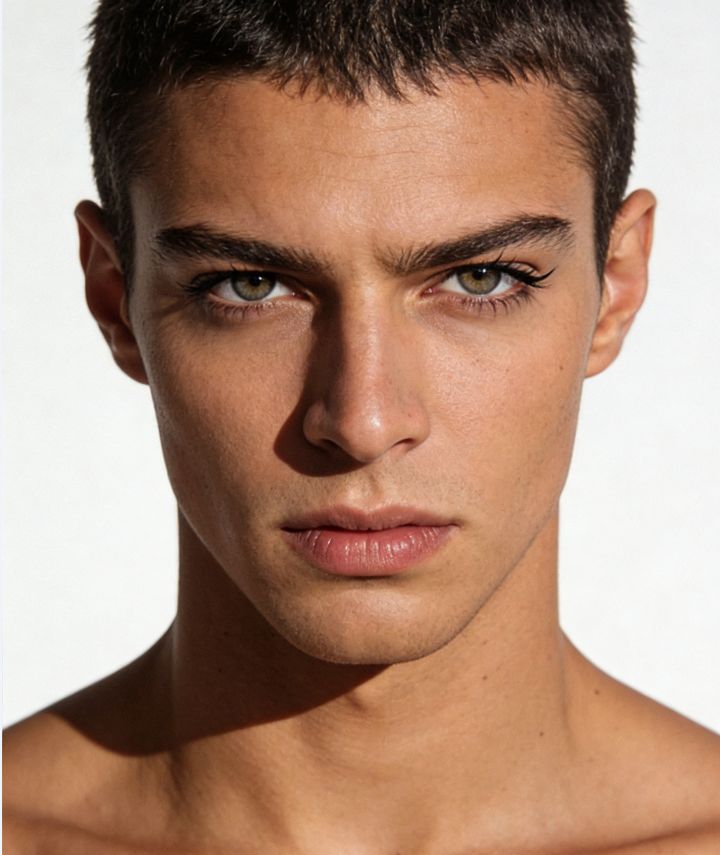
Hunter Eyes Score
Exceptional predatory gaze with strong positive canthal tilt, minimal eyelid exposure, and deep-set orbits. This represents a textbook example of high-tier Hunter eyes with ideal dimensions.
Canthal Tilt
9.5
Upper Eyelid Exposure
9.0
Lower Eyelid Exposure
9.5
Eye Socket Depth
8.5
Brow-Eye Distance
9.0
Eye Shape / Almond
9.5
huntereyes.net
Strengths
- ✓Strong positive canthal tilt
- ✓Minimal upper eyelid exposure
Weaknesses
- •Minor lower lid puffiness
- •Slight asymmetry in brow position
Improvement Suggestions
- •Maintain low body fat for orbital clarity
- •Use cold compresses for morning puffiness
- •Optimize sleep for skin health

Hunter Eyes Score
The eyes exhibit a strong positive canthal tilt and low-set brows, though high upper eyelid exposure and vertical openness prevent a true predatory Hunter classification.
Canthal Tilt
8.0
Upper Eyelid Exposure
4.0
Lower Eyelid Exposure
8.0
Eye Socket Depth
6.0
Brow-Eye Distance
8.0
Eye Shape / Almond
6.0
huntereyes.net
Strengths
- ✓Strong positive canthal tilt
- ✓Low brow-to-eye distance
Weaknesses
- •Significant upper eyelid exposure
- •Vertically wide palpebral fissure
Improvement Suggestions
- •Practice a 'hunter squint' (slight contraction of lower lids) as a default resting face.
- •Utilize cold compresses and caffeine-based eye creams to maximize lower lid tightness.
- •Maintain consistent tongue posture (mewing) to support the midface and orbital area.
Hunter Eyes Scoring System
Review the weighted 6 dimensions, then see how total score maps to Tier and community title.
Evaluation Dimensions (1-10)
| Dimension | Description | Weight |
|---|---|---|
| Canthal Tilt | Outer corner at or above inner corner aligns better with Hunter traits; negative tilt lowers score. | 20% |
| Upper Eyelid Exposure | Less upper scleral show and better upper lid coverage generally score higher. | 20% |
| Lower Eyelid Exposure | Tighter lower lid with minimal lower scleral show scores higher; visible lower white lowers score. | 15% |
| Eye Socket Depth | Deeper-set eyes with clearer orbital structure usually appear more Hunter-like. | 20% |
| Brow-Eye Distance | Lower brow position and shorter brow-eye distance usually increase intensity. | 10% |
| Eye Shape / Almond | A longer horizontal and narrower vertical eye aperture aligns more with the target template. | 15% |
Outer corner at or above inner corner aligns better with Hunter traits; negative tilt lowers score.
Less upper scleral show and better upper lid coverage generally score higher.
Tighter lower lid with minimal lower scleral show scores higher; visible lower white lowers score.
Deeper-set eyes with clearer orbital structure usually appear more Hunter-like.
Lower brow position and shorter brow-eye distance usually increase intensity.
A longer horizontal and narrower vertical eye aperture aligns more with the target template.
Tier Mapping
| Tier | Community Title | Typical Traits (Looksmaxxing lens) | Score Range |
|---|---|---|---|
| S Tier | God Tier / Supreme Hunter | Strong positive canthal tilt, deep-set sockets, minimal eyelid exposure, and dominant eye presence. | 8.5 - 10 |
| A Tier | High Tier / Chadlite | Clearly hunter-like traits with good structure, slight upward tilt, and high attractiveness. | 7.0 - 8.4 |
| B Tier | Average / Normie | Mostly neutral eye-area profile without strong hunter or prey extremes. | 5.5 - 6.9 |
| C Tier | Below Average | Mildly prey-leaning profile, rounder shape or slight downturn, limited depth. | 4.0 - 5.4 |
| D/F Tier | Prey Eyes / Sub5 | More obvious prey-like traits: downturn, scleral show, or shallow socket structure. | < 4.0 |
God Tier / Supreme Hunter
Strong positive canthal tilt, deep-set sockets, minimal eyelid exposure, and dominant eye presence.
High Tier / Chadlite
Clearly hunter-like traits with good structure, slight upward tilt, and high attractiveness.
Average / Normie
Mostly neutral eye-area profile without strong hunter or prey extremes.
Below Average
Mildly prey-leaning profile, rounder shape or slight downturn, limited depth.
Prey Eyes / Sub5
More obvious prey-like traits: downturn, scleral show, or shallow socket structure.
Features
Discover what makes Hunter Eyes evaluation the best choice for eye area aesthetics
Six-dimension eye area evaluation
Science-based assessment of canthal tilt, upper/lower eyelid exposure, eye socket depth, brow-eye distance, and eye shape to quantify how Hunter-like your eye area is.
Instant Hunter Eyes score
Get your 1-10 eye area score, Tier rank, and community title in seconds, plus actionable strengths/weakness insights.
Actionable improvement tips
Safe, non-surgical methods from the guide: UUDD exercises, squint training, cold compress, sleep, brow grooming, body fat, and mewing.
Scientific & roast modes
Scientific mode gives objective analysis and suggestions; roast mode delivers a funny, shareable take while keeping scores objective.
Privacy first
We never store your photos. Images are used only for evaluation and deleted after processing.
How It Works
Get your Hunter Eyes evaluation in three simple steps
Upload your photo
Upload a clear, front-facing photo with good lighting on the eyes and brow area. JPG, PNG, WebP (max 10MB).
AI eye area analysis
Our AI analyzes your eye area across six dimensions—canthal tilt, upper eyelid exposure, socket depth, and more—against the Hunter Eyes ideal.
View results
Receive your Hunter Eyes score and detailed analysis in seconds, plus personalized improvement tips (e.g. UUDD, cold compress, brow grooming).
Example evaluation result
See what a Hunter Eyes evaluation looks like
Hunter Eyes Score
Exceptional predatory gaze with strong positive canthal tilt, minimal eyelid exposure, and deep-set orbits. This represents a textbook example of high-tier Hunter eyes with ideal dimensions.
Canthal Tilt
9.5
Upper Eyelid Exposure
9.0
Lower Eyelid Exposure
9.5
Eye Socket Depth
8.5
Brow-Eye Distance
9.0
Eye Shape / Almond
9.5
huntereyes.net
This is an example. Your actual result will include six-dimension scores and personalized suggestions.
FAQ
Frequently asked questions about Hunter Eyes evaluation